JellyFil Official Website › Blog › Gummies vs Capsules
Supplement Gummies vs Capsules: Which Format Is Actually Better?
Capsules hold more. Gummies get taken more often. For a daily supplement that only works if you keep taking it, that trade-off decides more than most buyers realize — and it is the reason JellyFil is a gummy.

- Capsules carry far more active material per unit — grams, not milligrams.
- Gummies carry less, because sugar, pectin and flavor take up most of the volume.
- Adherence is where gummies win, and adherence decides whether any daily supplement does anything at all.
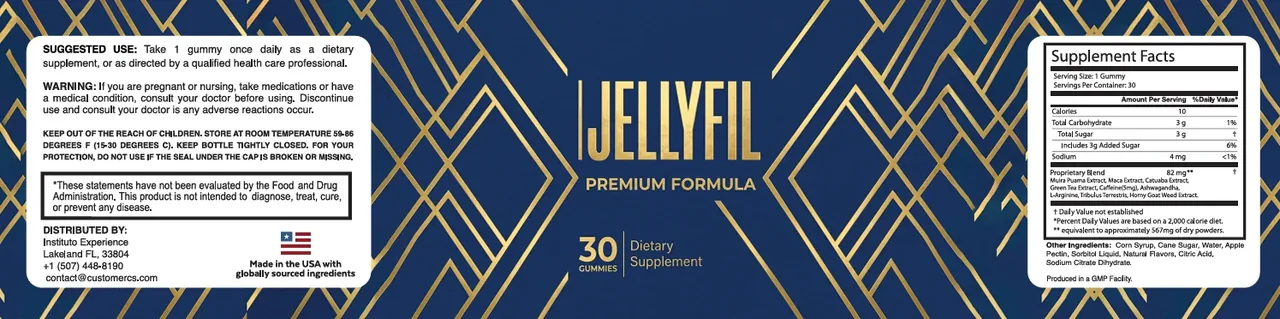
- JellyFil is a gummy, which is why its blend is 82 mg. That is the honest trade-off, stated plainly rather than buried.
What actually differs
The active ingredients are the same molecules either way. What changes is how much fits, how it tastes, how it is stored, and — the part nobody prints on a label — how likely you are to still be taking it in week six.
| Factor | Gummy | Capsule |
|---|---|---|
| Active capacity | Tens of milligrams | Up to about 1,000 mg |
| Taste | Pleasant by design | Neutral, sometimes an aftertaste |
| Swallowing | Chewed — no water needed | Difficult for some people |
| Added sugar | Usually 1–3 g each | None |
| Heat stability | Poor — melts and sticks | Good |
| Likelihood of daily use | Higher | Lower |
Capacity: capsules win, decisively
This is not close. A large capsule holds most of a gram of powder. A gummy has to be sweet, chewable and shelf-stable, and those requirements consume nearly all of its volume.
That is why JellyFil's nine botanicals share 82 mg rather than the hundreds of milligrams the underlying trials used — the ashwagandha meta-analysis pooled trials at roughly 300–600 mg of a single extract, and the maca review covers trials dosed in grams. We print that comparison ingredient by ingredient on the ingredients page. Anyone telling you a gummy delivers a clinical botanical dose is not doing the arithmetic.
What that means in practice
Read a gummy as a low-dose daily habit, not as a concentrated intervention. If you want a studied dose of a single botanical, buy that botanical as a capsule, at that dose. For that goal it is a genuinely better choice, and we would rather say so than pretend otherwise.
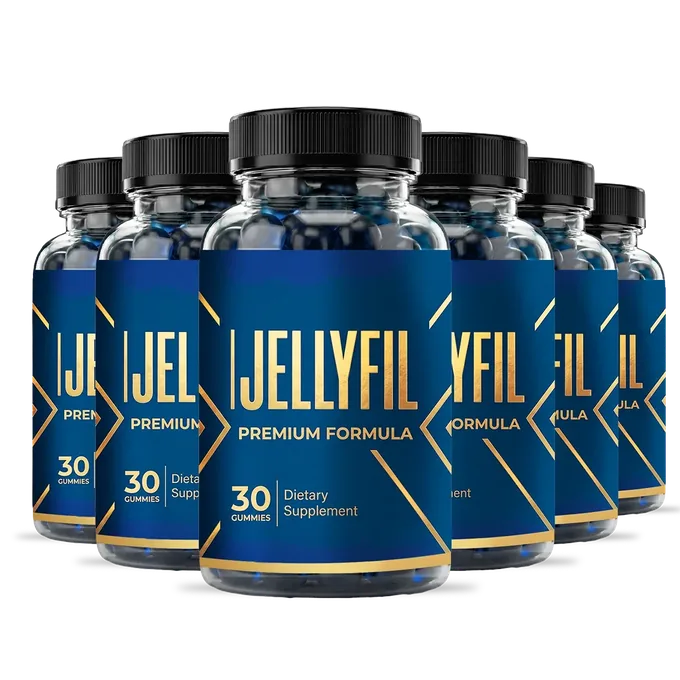
A gummy you will actually take.
That is the honest case for this format — not a bigger dose, a kept habit. Six bottles is 180 days at one a morning, long enough for the routine to become automatic.
$294 — six bottles at $49 each
Order On The Official WebsiteFree US shipping · 60-day money-back guarantee · no subscription
Does the format change absorption?
This is the claim you will see most often in favour of gummies, usually phrased as “better bioavailability because it starts dissolving in the mouth.” It is worth taking apart, because the honest answer is more boring than either side admits.
Chewing does begin breaking a gummy down earlier than a capsule, which dissolves in the stomach. For most botanical extracts that changes very little: absorption happens in the small intestine either way, and a few minutes’ head start is not the bottleneck. Where the starting point genuinely matters is for compounds absorbed through the mouth lining, and that is a short list this panel is not on.
So treat “better absorbed” as marketing unless a specific ingredient is named with a specific reason. A gummy that holds 82 mg does not out-deliver a capsule holding 500 mg because it dissolves sooner. NCCIH's guidance on herbal supplements is a good corrective for claims of this shape.
What does change with food
Taking either format with a meal slows everything slightly and, for some people, settles the stomach. That is a real effect and it applies to both. The how to use page covers the timing we suggest.
Adherence: gummies win, and it matters
Here is the part that gets left out of format comparisons. A supplement's effect in your life is its effect in a trial multiplied by how often you actually take it. A capsule at a perfect dose, taken three days a week, loses to a modest gummy taken seven.
People abandon supplements because they are unpleasant, because swallowing is difficult, or because they simply forget. A gummy addresses the first two directly and the third indirectly — something that tastes good is easier to attach to a morning routine.
Our own reviews say this repeatedly, and it is the most consistent theme in them: the format is why people stayed on it. You can read them in full, including the critical ones, on the reviews page.
The sugar question
Gummies contain sugar. It is a fair objection and it deserves a straight answer rather than deflection.
- A typical supplement gummy carries roughly 1–3 g of sugar.
- At one gummy a day that is a rounding error against a normal diet — a single teaspoon is about 4 g.
- It is not nothing if you are managing blood sugar. If you are, raise it with whoever manages that, and take the full printed panel with you.
- Check the bottle you receive. Formulations change, and the panel in your hand is the authority — not this page.
Storage, travel and the things nobody mentions
Format affects the practical life of a supplement more than the marketing lets on, and these are the differences that decide whether a bottle gets finished.
- Heat. Gummies melt and stick together. A car glovebox in July will ruin a bottle; a capsule will shrug it off. Keep gummies somewhere cool and dark, which for most people means a kitchen cupboard rather than a windowsill.
- Travel. Capsules survive a bag better. Gummies are fine for a week away if they are not sitting in direct sun.
- Shelf life. Both carry a best-before date; neither improves with age. Check the date on the bottle you receive against the lot on the batch verification page.
- Children. This is the serious one. A supplement that tastes like candy is a supplement a child will eat, and JellyFil is for adults aged 18 and over. Store it out of reach and not in the snack cupboard.
- Counting. Thirty gummies, one a day, is a month. The simplicity of that is part of why the format holds up.
What each format costs per day
Format also changes the arithmetic, and it is worth doing before you decide.
| What you buy | Typical cost per day | What you get for it |
|---|---|---|
| Single-botanical capsule | Low | One ingredient at a studied dose |
| Multi-ingredient capsule | Low to moderate | More names, usually smaller amounts each |
| JellyFil, 2-bottle pack | $2.63 | Nine botanicals in an 82 mg blend, plus the format |
| JellyFil, 6-bottle pack | $1.63 | The same, at the lowest per-bottle price |
A gummy is rarely the cheapest way to buy a given milligram of anything — you are paying for the delivery format as well as the contents. Whether that is worth it depends entirely on whether the format is what gets you to take it. Full pricing is on the pricing page.
Which should you buy?
Buy a capsule if you want a specific botanical at the dose its trials used, you have no trouble swallowing them, and you will reliably take it.
Buy a gummy if you have abandoned capsules before, you want a low-friction daily habit, and you are content with a modest effect from a small blend.
NCCIH's guidance on herbal supplements is a good neutral starting point either way, and the FDA's questions and answers on dietary supplements explains what the category is and is not regulated to do.
Questions people ask about supplement gummies
Are gummies less effective than capsules?
Per unit, they carry less active material — that part is simply true. Whether that makes them less effective for you depends on whether you would have taken the capsule every day. A format carrying a third of the dose taken seven days a week is not obviously behind one carrying three times as much taken twice.
Can I take two gummies to double the dose?
Take the serving on the label. Doubling also doubles the sugar and the caffeine, and the panel was not designed around two. If one a day is doing nothing after a month, the answer is the guarantee, not a bigger pile.
Do gummies contain gelatin?
Some do and some use pectin instead, which is the plant-based alternative. This matters if you are vegetarian, vegan, or avoiding pork or beef for religious reasons, and it is answered on the ingredients page for this product. Check the bottle you actually receive rather than any website, ours included — formulations change and the printed panel is the authority.
Will a gummy affect my blood sugar?
One to three grams of sugar is a small amount against a normal day’s intake, but “small” is not the same as “irrelevant” if you are managing blood glucose. That is a question for whoever manages it, and the panel is printed in full so you can show them rather than describe it.
What about the caffeine?
There is 5 mg per gummy here — roughly a twentieth of a cup of coffee by the FDA's own figures. Most supplement gummies contain none at all. If you are caffeine-sensitive, take it in the morning, which the label recommends regardless.
References
- Shin BC, Lee MS, Yang EJ, Lim HS, Ernst E. Maca (L. meyenii) for improving sexual function: a systematic review. BMC Complementary and Alternative Medicine. 2010. https://pubmed.ncbi.nlm.nih.gov/20691074/
- Effects of Ashwagandha (Withania somnifera) on stress and anxiety: a systematic review and meta-analysis. 2024. https://pubmed.ncbi.nlm.nih.gov/39348746/
- U.S. Food and Drug Administration. Spilling the beans: how much caffeine is too much? https://www.fda.gov/consumers/consumer-updates/spilling-beans-how-much-caffeine-too-much
- National Center for Complementary and Integrative Health. Dietary and herbal supplements. https://www.nccih.nih.gov/health/dietary-and-herbal-supplements
- U.S. Food and Drug Administration. Questions and answers on dietary supplements. https://www.fda.gov/food/information-consumers-using-dietary-supplements/questions-and-answers-dietary-supplements

Every page, every journal post, the bottle facts and the ingredients go through review by Dr. Brian Christine, MD before they ship. We write these pages from the JellyFil label and the manufacturer’s own batch paperwork, cite public nutrient references for the ingredients, and print “not published” wherever a figure is not disclosed rather than estimating it. Corrections are made on the page itself and the review date moves forward when that happens — write to [email protected]. Last reviewed September 2026 by Dr. Brian Christine, MD.
The format is the point.
A small daily dose you actually keep taking beats a perfect dose left in a cupboard. Sixty days is long enough to find out whether that holds for you.
$294 — six bottles at $49 each
Order JellyFil On The Official WebsiteFree US shipping · 60-day money-back guarantee · no subscription · batch JF-26/E-2219