JellyFil Official Website › JellyFil Ingredients
JellyFil Ingredients: What Is Inside Every Gummy
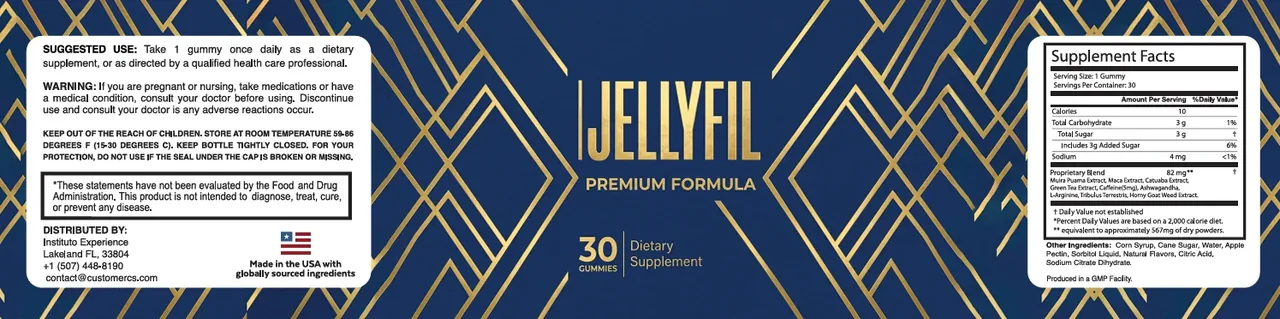
JellyFil contains nine named ingredients: eight in an 82 mg blend, plus caffeine.
The eight are Muira Puama, Maca, Catuaba, Green Tea, Ashwagandha, L-Arginine, Tribulus Terrestris and Horny Goat Weed. Caffeine is declared on its own at 5 mg, and each gummy has about 3 g of sugar and 10 calories.
The honest part first. Eighty-two milligrams shared between nine ingredients is a small total. Whatever the split is, every individual amount sits well below the doses used in most published single-ingredient research — for several of these botanicals, studies use hundreds of milligrams or more. Anyone shopping on dose transparency alone will find that frustrating, and they are not wrong to. What JellyFil is built around is a daily habit people actually keep, not a large single dose.
The eight botanicals we can photograph
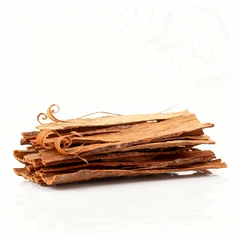 Muira PuamaPtychopetalum olacoides
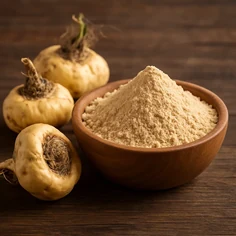 MacaLepidium meyenii
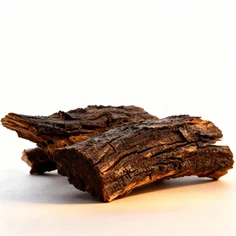 CatuabaTrichilia catigua
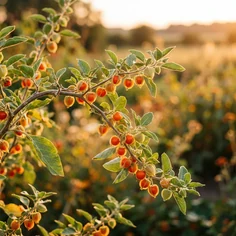 AshwagandhaWithania somnifera
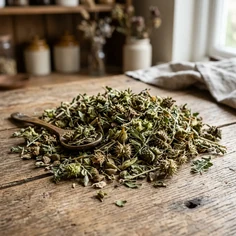 TribulusPuncture vine
 Caffeine5 mg, declared
 Green TeaCamellia sinensis
 L-ArginineAmino acid
Every JellyFil ingredient explained
Grouped by the job the formula asks each one to do. Where the evidence is thin, this page says so.
Muira Puama
Not publishedPtychopetalum olacoides · Traditional tonic
An Amazonian shrub whose root and bark have been used in Brazilian traditional medicine for generations — the common name translates as “potency wood”. It is one of three South American botanicals that give this blend its character. Evidence: long traditional use plus small, mostly older human studies. There is no modern randomised trial record to point you at, and it would be dishonest to imply otherwise — NCCIH sets out how to read botanicals in that position.
Sources: NCCIH
Maca
Not publishedLepidium meyenii · Hormonal & libido support
A cruciferous root grown at altitude in the Peruvian Andes, eaten as a food there and used as a supplement elsewhere. Of the nine ingredients on this panel, Maca has the most human research behind it. Evidence: a 12-week double-blind randomised trial (Gonzales 2002, Andrologia) reported improved sexual desire in men from week 8, and found the effect independent of serum testosterone and oestradiol. A later double-blind trial in men with mild erectile dysfunction (Zenico 2009, Andrologia) reported a small but significant improvement in subjective sexual well-being, and a systematic review of the trial literature reached the same cautious conclusion. Those trials use gram-scale daily doses — 1,500 to 3,000 mg — far more than an 82 mg blend can deliver.
Sources: Gonzales 2002, Andrologia · Zenico 2009, Andrologia · Shin 2010, systematic review
Catuaba
Not publishedTrichilia catigua · Traditional tonic
Bark from a Brazilian tree, traditionally taken as a tonic and very often paired with Muira Puama — the two travel together in traditional Brazilian preparations, and they travel together here. Evidence: mostly preclinical. Traditional use is the honest basis for its inclusion, and NCCIH is the right starting point for judging that kind of evidence.
Sources: NCCIH
Green Tea
Not publishedCamellia sinensis · Antioxidant & energy
One of the most studied plants in the supplement world, carrying catechin polyphenols — EGCG being the best known. In this formula it is also the natural partner to the declared caffeine, since the two occur together in the leaf. Evidence: a review of green tea catechins and vascular function (Moore 2009, Br J Nutr) describes the endothelial mechanism, and a meta-analysis of 13 randomised trials found a modest blood-pressure effect from green tea consumption. NCCIH summarises the wider safety and efficacy picture. As with the rest of this panel, those intakes sit far above what a shared 82 mg blend provides.
Sources: Moore 2009, Br J Nutr · 2014 meta-analysis of 13 RCTs · NCCIH
Caffeine
5 mg5 mg per gummy, declared separately · Same-day energy
The only ingredient on the label with a published number of its own, and the only one with a same-day effect. Five milligrams is small: the FDA puts a cup of brewed coffee at roughly 80–100 mg, so one gummy carries about a twentieth of a cup. Several reviewers say they notice it anyway in the first week, before anything else has had time to build. If you are caffeine-sensitive, that is why the label says morning — and why it says one gummy, since doubling up doubles the caffeine.
Sources: FDA consumer update
Ashwagandha
Not publishedWithania somnifera · Adaptogen · stress
The classical adaptogen of Ayurvedic medicine and, alongside Maca, the best-researched item on this panel. It is included because for many men the real drain is chronic stress rather than anything else, and cortisol is the mechanism connecting the two. Evidence: a 2024 systematic review and meta-analysis covering nine randomised controlled trials in 558 people reported reduced perceived stress, anxiety and serum cortisol. A 60-day placebo-controlled trial (Lopresti 2019, RCT) using a 240 mg standardised extract reported significantly greater reductions in morning cortisol than placebo. NIH Office of Dietary Supplements maintains a current fact sheet including the safety caveats. Caution: can interact with thyroid medication and with sedatives.
Sources: 2024 meta-analysis of 9 RCTs · Lopresti 2019, RCT · NIH Office of Dietary Supplements
L-Arginine
Not publishedAmino acid · nitric oxide precursor · Circulation
The one item on the panel with a mechanism you can draw on a whiteboard. L-arginine is the substrate the body converts into nitric oxide, the signalling molecule that relaxes the smooth muscle lining blood vessels; relaxed walls widen, and wider vessels carry blood more easily. Evidence: the pharmacokinetics are well described (Schwedhelm 2008, Br J Clin Pharmacol): oral arginine is subject to heavy first-pass extraction by intestinal arginase before it reaches circulation, which is exactly why dose matters so much here. A 2019 review of oral arginine and citrulline found blood-pressure effects at gram-scale intakes. MedlinePlus carries the consumer-facing summary. Caution: this is the ingredient behind the medication warnings on this website.
Sources: Schwedhelm 2008, Br J Clin Pharmacol · 2019 review, Nutrients · MedlinePlus
Tribulus Terrestris
Not publishedPuncture vine · Hormonal support
A fixture of men’s supplements for thirty years, used traditionally in both Ayurvedic and Chinese medicine and marketed hard on testosterone claims since the 1990s. Evidence: this is the weakest item on the panel, and we would rather say so. A 2025 systematic review in Nutrients of clinical trials found that eight of ten studies reported no significant change in androgen profile, and concluded there is no robust evidence that tribulus raises testosterone. A prospective trial in men found no significant difference in total or free testosterone, LH or semen parameters after treatment. Treat any testosterone claim about this herb — here or anywhere — with scepticism.
Sources: 2025 systematic review, Nutrients · prospective trial in men
Horny Goat Weed
Not publishedEpimedium spp. · Traditional tonic
The classical herb of this product category, used in Chinese medicine for centuries. Its principal active is icariin, a flavonoid studied on the same nitric-oxide signalling pathway that L-arginine feeds. Evidence: laboratory and animal work (Shindel 2010, J Sex Med) describes icariin as a weak PDE5 inhibitor — orders of magnitude less potent than prescription PDE5 drugs — and further work (icariin and endothelial NO) reports increased endothelial nitric oxide synthase expression. Controlled human data remain limited. MedlinePlus carries the consumer summary. Caution: may interact with blood thinners and with blood pressure medication.
Sources: Shindel 2010, J Sex Med · icariin and endothelial NO · MedlinePlus
The JellyFil label, as printed
| Serving size: 1 gummy | Per serving |
|---|---|
| Servings per bottle | 30 |
| Calories | ~10 |
| Total sugars | ~3 g |
| Caffeine | 5 mg |
| Proprietary blend | 82 mg |
| Muira Puama, Maca, Catuaba, Green Tea, Ashwagandha, L-Arginine, Tribulus Terrestris, Horny Goat Weed — individual amounts not published | |
Non-GMO · gluten free · dairy free · vegetarian. Made in the United States in a GMP facility with globally sourced ingredients. Always read the label on the bottle you receive.
Why nine ingredients and not one
Formulas in this category split two ways. Some pick one ingredient and dose it heavily. Others name many and dose each lightly. JellyFil is firmly in the second group, and here is the reasoning behind that, stated plainly.
The panel covers three routes at once — circulation through L-arginine, stress and hormonal support through ashwagandha, tribulus and maca, and traditional tonic botanicals through muira puama, catuaba and horny goat weed, with green tea and a small declared caffeine dose carrying the same-day piece. Men arrive at a product like this for different underlying reasons, and a broad panel covers more of those reasons than a single ingredient can.
The cost of that choice is the one this page opened with: spread 82 mg across nine ingredients and no single one arrives in a research-scale amount.
The manufacturer does not claim otherwise, and neither does this website. What you are buying is a small, consistent daily input in a format people actually keep taking — which is why every page here points at the 30-day mark rather than the first week.
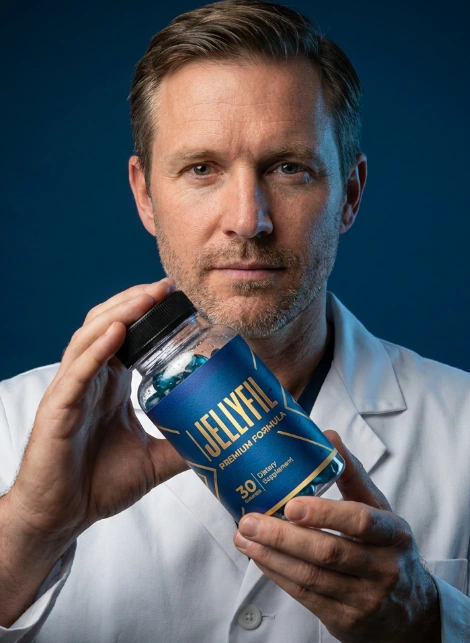
Every page, every journal post, the bottle facts and the ingredients go through review by Dr. Brian Christine, MD before they ship. We write these pages from the JellyFil label and the manufacturer’s own batch paperwork, cite public nutrient references for the ingredients, and print “not published” wherever a figure is not disclosed rather than estimating it. Corrections are made on the page itself and the review date moves forward when that happens — write to [email protected]. Last reviewed September 2026 by Dr. Brian Christine, MD.
Ingredient questions
How many milligrams of each ingredient are there?
Not published. Eight of the nine sit inside one 82 mg proprietary blend and only the total is declared. Caffeine is declared separately at 5 mg. This website prints “not published” rather than inventing a breakdown.
Is 82 mg enough to do anything?
It is a small total, and every amount inside it is below the doses used in most published single-ingredient research. The 5 mg of caffeine is the only element with a documented same-day effect. The 60-day guarantee exists precisely because the answer varies by person.
Does JellyFil contain sugar?
Yes — about 3 g per gummy and about 10 calories. That is what makes it a chewable rather than a capsule.
Is it vegetarian, gluten free and non-GMO?
Yes to all three, and dairy free as well. There is no gelatin capsule, because there is no capsule.
Are there stimulants besides caffeine?
Green tea naturally contains a small amount of caffeine of its own, which is why the two appear together. The declared figure on the label is 5 mg per gummy. No other stimulants are listed.
Could any of this interact with my medication?
Yes, potentially. L-arginine and horny goat weed act on the vasodilation pathway that nitrates, blood pressure medication and erectile dysfunction drugs use. Ashwagandha can interact with thyroid medication and sedatives. Horny goat weed may interact with blood thinners. Speak to a pharmacist before starting.
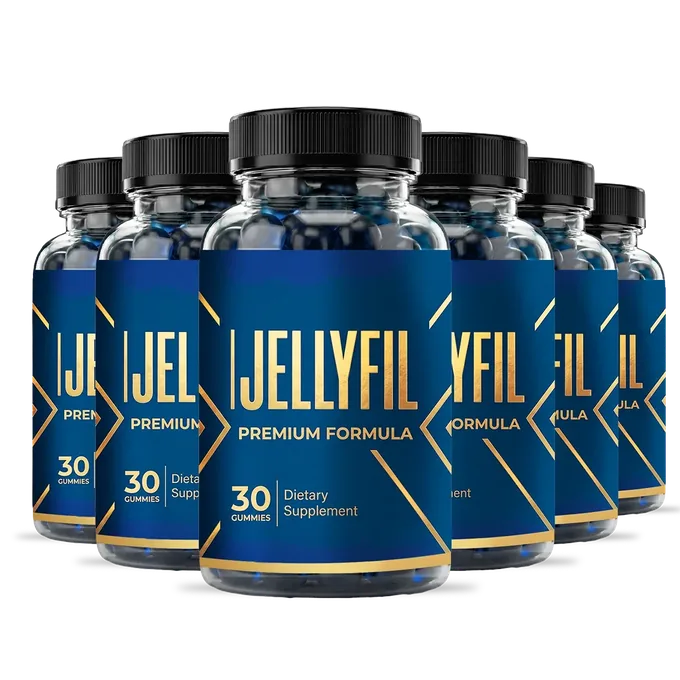
Nine named ingredients. One gummy a morning.
Six bottles at $49 each with free US shipping, and sixty days to change your mind.
$294 — six bottles at $49 each
Order JellyFil On The Official WebsiteFree US shipping · 60-day money-back guarantee · no subscription · batch JF-26/E-2219